
How to take a good photo of your child for a personalized book
The best photo for a personalized book is not the most posed one. Soft, indirect light, a straight-on angle at your child's eye level, and an ordinary relaxed expression give an illustrator the most to work with. A squinting sunny-day photo or a wide open-mouthed grin gives them the least.
Why the photo matters more than most parents expect
Every illustration in a personalized book is built from one source photograph. The illustrator is working out the architecture of a face: the distance between the eyes, where the light falls across the cheek, how the hair actually sits rather than how it sits on a good day. A photo that hides any of that forces guesswork — and guesswork is exactly what produces a child who looks almost, but not quite, like themselves.
The encouraging part is that the requirements are far more forgiving than a studio session. A phone photo taken beside a window beats a professional portrait shot in direct sun almost every time. You are not trying to take a beautiful picture. You are collecting clear information about a face.
Tip · The window test
Stand your child a step back from a window on an overcast day, facing the light, and take the photo from their eye level. That single adjustment fixes most photo problems at once.
What a good source photo actually looks like
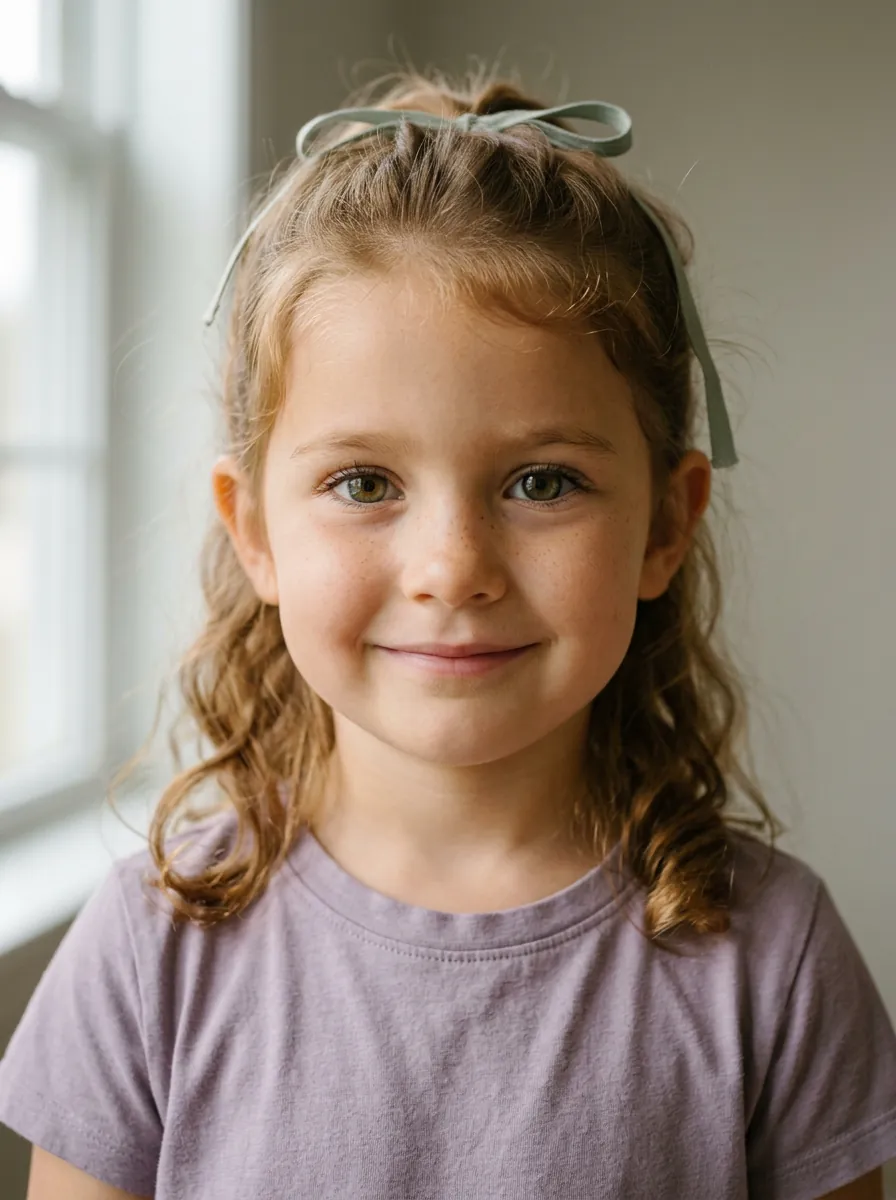
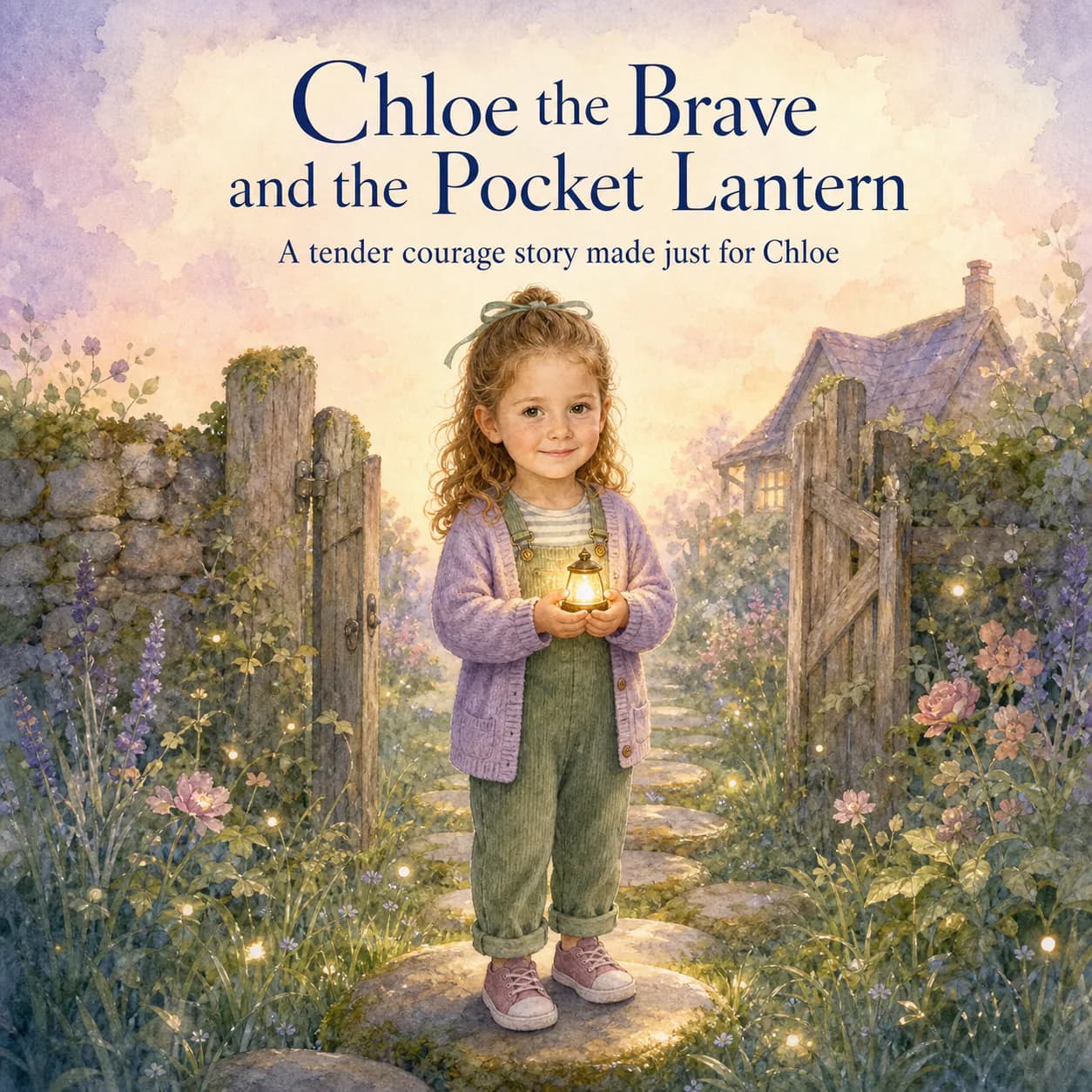
Here is a real photograph a parent sent us, next to the cover it became. Nothing about the original is remarkable — that is the point. It is well lit, straight on, and the child's face is entirely visible.
The photo
The illustration
The five things that make a photo work
In rough order of how much difference each one makes to the finished illustration:
Soft, even light
Overcast daylight, open shade, or a window indoors. Direct sun makes children squint and carves hard shadows that hide half the face.
Eye level, straight on
Crouch down to their height. A photo taken from standing adult height foreshortens the face in a way that carries straight into the illustration.
A calm expression
A wide open-mouthed grin is lovely and very hard to carry across forty pages. A relaxed half-smile reads as recognisably them on every single spread.
The whole head in frame
Hair, ears, and a little space above the head. A cropped hairline means an invented hairline.
A quiet background
A plain wall beats a busy playroom. The less there is competing with the child, the more cleanly they separate from it.
Five mistakes worth avoiding
These are the ones that most often mean we come back and ask for a different photo:
- Bright midday sun — squinting eyes and hard shadows across the face.
- Beauty filters and smoothing — they remove precisely the small details that make a child recognisable.
- Photos taken from far away and cropped in — there is too little real detail left to work from.
- Hats and sunglasses — they hide the hair and the eyes, which are most of what makes a face read as itself.
- Motion blur — a still, ordinary moment is far more useful here than an action shot.
A quick reference by age
What is easy to photograph changes considerably as children grow. Roughly:
| Age | The usual difficulty | What works |
|---|---|---|
| 0–12 months | No head control, unpredictable timing | Lay them on a plain blanket near a window and shoot from directly above |
| 1–3 years | Constant motion, camera-shyness | Let them settle into something absorbing, then photograph quietly from their level |
| 3–5 years | Performing for the camera | Ask them to look at you without saying 'smile' — talk to them instead |
| 6–8 years | Fixed, self-conscious grin | Photograph a beat after the posed smile drops, when the face relaxes |
Does the art style change what photo you need?
A little, but less than most parents expect. All four Souvenit styles — watercolor, classic storybook, comic, and anime — are illustrated from the same kind of source photo, because the illustrator is extracting the same underlying information from it regardless of the art direction it ends up rendered in.
Where style does matter is tolerance for imperfection. Watercolor and classic storybook are soft, painterly styles that read forgivingly if the lighting is slightly uneven. Comic and anime rely on cleaner lines and higher contrast between features, so they show a poorly lit or blurry source photo more readily. If you are choosing between styles and your best available photo is a little soft or shot in mixed light, watercolor or classic storybook will generally look closer to the source than comic or anime would from the same image.
None of that changes the core advice. A photo that follows the five rules above will illustrate well in any of the four styles — style tolerance is a matter of degree, not a reason to shoot differently.
What to do when your child will not cooperate
Most toddlers do one of two things when a camera appears: perform, or flee. Neither gives you what you need. The reliable move is to stop making it an event. Put the phone down, let them settle into something genuinely absorbing near a window, and then photograph quietly from their eye level without announcing it.
It is worth repeating that you are not trying to capture a special moment. An ordinary Tuesday afternoon photograph, taken while a child is mildly bored and well lit, is very often the most useful picture you will ever send us.
Worth knowing · Ordinary beats special
Birthday and holiday photos are usually the worst candidates — party lighting, excited expressions, and busy backgrounds all at once. The quiet weekday photo almost always illustrates better.
Common questions
Can I use an older photo?
Yes, as long as it is sharp and well lit. For children under three, a recent photo matters considerably more — faces change quickly at that age, and a book illustrated from a year-old photo may not look like the child holding it.
Does the photo need to be professional?
No. A recent phone photo taken in soft daylight is usually better than a studio portrait with heavy lighting or retouching. Phone cameras capture more than enough detail.
What if my child wears glasses?
Keep them on if they wear them every day — they are part of how the child looks and how they will recognise themselves. Just avoid glare or reflections across the lenses.
Can I send one photo with two children in it?
Send a separate clear photo of each child instead. Books with two characters are illustrated from two separate source images, so each face needs its own well-lit photograph.
What file size or format should I send?
Any standard photo straight from a phone or camera is fine — JPEG, HEIC, or PNG. Send the original rather than a screenshot or a version shared through a messaging app, since those are compressed and lose detail.
Written by
The Souvenit Studio
Illustration & Production Team
The team that turns uploaded photographs into finished storybook art. They review every source photo that comes through Souvenit, which is how this guidance was assembled — from the patterns that repeat across thousands of uploads.
Where to go next
See how a finished sample book feels
Send one photo and we'll illustrate the whole book. Read it before you decide whether to order the hardcover.
Personalize their bookNo credit card required.